

FAQS
 FAQS
FAQS
NATSAN WORKS Frequently asked Question & Answers
How does water purification using Reverse osmosis machines works
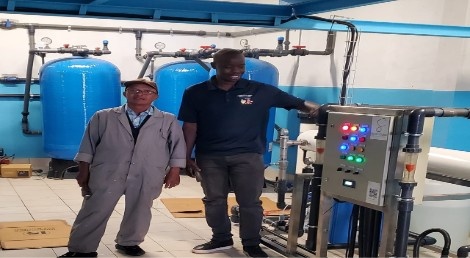
Reverse osmosis (RO) purifies water by using pressure to force it through a semi-permeable membrane, which blocks contaminants like minerals, bacteria, and chemicals, allowing only pure water molecules to pass through, effectively separating clean water from impurities in stages including pre-filtration (sediment/carbon), membrane filtration, and post-filtration for improved taste, storing the purified water in a tank
How does chillers and pasteurizer work?
Chillers rapidly remove heat from liquids using a refrigeration cycle (compressor, condenser, evaporator) to store them cold, while pasteurizers use controlled heating (batch or HTST) to kill harmful microbes, followed by quick cooling, to extend shelf life and ensure safety; they work together, with chillers often cooling milk after it's been heated by the pasteurizer to halt bacterial growth.
How a Pasteurizer Works (for Milk)?
Heating: Milk is gently heated to a specific temperature (e.g., 72°C/161°F for HTST or 63°C/145°F for batch) and held for a set time (e.g., 15 seconds or 30 minutes). Heat Transfer: This happens in a jacketed tank (batch) or through a plate heat exchanger (continuous flow). Purpose: Kills pathogens like Salmonella, E. coli, and Listeria, making milk safe to drink.
How a Chiller Works (Refrigeration Cycle)
1. Refrigerant: A refrigerant fluid absorbs heat from the milk (or water). 2. Compression: A compressor pressurizes the refrigerant, making it hot. 3. Condensing: The hot gas releases heat to the air (air-cooled) or water (water-cooled) and turns back into a liquid. 4. Expansion: An expansion valve lowers the pressure, causing the liquid refrigerant to become very cold. 5. Evaporation: The cold refrigerant then flows through coils (in a jacket around the milk tank or a heat exchanger) where it absorbs heat from the milk, cooling it down. 6. Cycling: This process repeats, removing heat continuously. This video provides a basic overview of how a chiller system works:
What are Core Refrigeration Components (ACs and Cold Rooms)?
Main components are compressors, condensors, expansion device valve and evaporators. Other components include; Refrigerant, fans, Piping (Suction and Discharge Lines),Temperature Control Systems, Insulation, filters, doors and sealers
Ask the Help Community
Write Now!
Write Now!
Quick sales@natsanworks.co.ke
Still have Questions?
Call Now!
Call Now!